Losing teeth isn’t just a cosmetic issue. It influences the way that you eat, how you speak, and how your face is supported over time. When an entire arch is lost, the change in daily function and confidence can be drastic. The good news is that modern dentistry offers a number of solutions that go well beyond traditional dentures.
The two most common are All-on-X dental implants and traditional full-arch implants. Both involve implants anchored into the jawbone to support a full arch of replacement teeth. But All-on-X takes a slightly more contemporary approach — one built around efficiency, precision, and longevity.
Nobody doubts that traditional full-arch implants work. They do, and decades of patients walking around with functioning teeth prove it. What All-on-X brought to the table wasn’t a replacement for that—it was a change in strategy. The whole premise is that the positioning of the implants is more important than the number of implants. Dentists started angling implants into sections of the jaw where bone density was already sufficient, planning each case down to the millimeter using digital imaging. That level of precision opened doors for patients who would have otherwise needed bone grafts before anything could get started.
The real differences between the two? Number of implants, where they sit, how you deal with bone that’s already deteriorated, what kind of teeth you end up wearing at the end of all this. Some people are totally fine with four implants if everything lines up right. For other people, their jaw tells a different story, and they need more hardware. While both approaches can be effective, the right solution ultimately depends on a thorough clinical evaluation, digital planning, and an understanding of each patient’s long-term goals.
We help patients make these decisions every day, combining careful planning with long-lasting results. If you’re considering dental implants, an in-depth consultation allows us to create a treatment plan tailored to your needs and goals.
 Who Needs All-on-X or Traditional Full Arch Implants
The first step is understanding who benefits the most from each procedure, and whether or not you need full-arch implants at all. A consultation with an experienced dentist ensures that your treatment is comfortable, natural-looking, and built to last.
Not all people who have lost teeth necessarily need the same procedure. Every treatment plan is individually tailored according to your bone health, remaining teeth, and long-term goals. Full-arch implants are usually prescribed for patients with extensive or complete tooth loss in the upper or lower jaws.
1. Patients with Extensive Tooth Loss
Removable dentures may not be effective for people with significant or total tooth loss. Traditional dentures often feel unstable and uncomfortable and may not provide the chewing strength most people need for day-to-day life.
If you’ve had trouble with dentures sliding out of place or discomfort within your jaw, you may be an appropriate candidate for All-on-X. This approach uses strategically placed implants to support a secure, full-arch restoration.
Modern full-arch techniques focus on placing implants in the strongest areas of available bone. For many patients, this approach may offer the advantage of reduced complexity while still providing the patient with a fixed and very stable solution.
At De Cardenas DMD, we help you understand the difference between traditional dentures and implant dentistry. We explain how All-on-X can improve daily function, including speaking and eating. Because the implants fuse with your jawbone, the final restoration feels stable and natural.
2. Patients With Jawbone Concerns
After tooth loss, the jawbone begins to shrink because it is no longer stimulated by the roots of your teeth. As the jawbone recedes, it may become problematic to insert dental implants. In many cases, fewer implants are needed because they are placed at precise angles to take advantage of denser areas of bone.
With more advanced full-arch techniques, implants can be angled into areas where the bone is naturally denser. That kind of deliberate positioning ties into how modern cases are planned now — prioritizing long-term stability and avoiding grafting when the anatomy allows for it.
Traditional full-arch methods tend to call for more implants, and sometimes bone grafting on top of that. All-on-X works differently — it’s built around making the most of whatever bone is already there, which often means grafting isn’t necessary. At De Cardenas DMD, we use the latest technology to ensure bone density is adequate to support dental implants.
3. Patients Seeking a Fixed Solution
For some people, removable dentures just aren’t good enough anymore. They want a permanent solution. They want to have a full set of teeth that will stay with them throughout the day.
Our team at De Cardenas DMD has the experience to provide patients with the benefits of using dental implants to achieve a fixed restoration of teeth. We will take the time to ensure you understand the benefits of dental implants compared to traditional dentures.
How All-On-X Dental Implant Treatment Works
The All-on-X procedure replaces an entire arch of teeth using fewer, strategically positioned implants. The exact number used depends on your specific needs.
This modern approach focuses on digital precision and strategic placement rather than simply using more implants. The emphasis is no longer on the quantity of implants used but rather on strategically loading the dental arch.
1. The Consultation and Planning Process
Every dental implant procedure begins with a comprehensive consultation at our office in Miami. During this session, we will check your oral status, medical history, and scan your jawbone structure. These scans help us determine exactly how many implants you need for long-term stability.
This planning allows us to place implants for maximum stability while working within your natural bone structure. If your remaining teeth are failing, they may be removed as part of the preparation.
Your comfort and individualized care are our top priorities. We design each dental implant procedure according to your unique jawbone structure, number of missing teeth, and your expectations for comfort and aesthetics.
2. Implant Placement
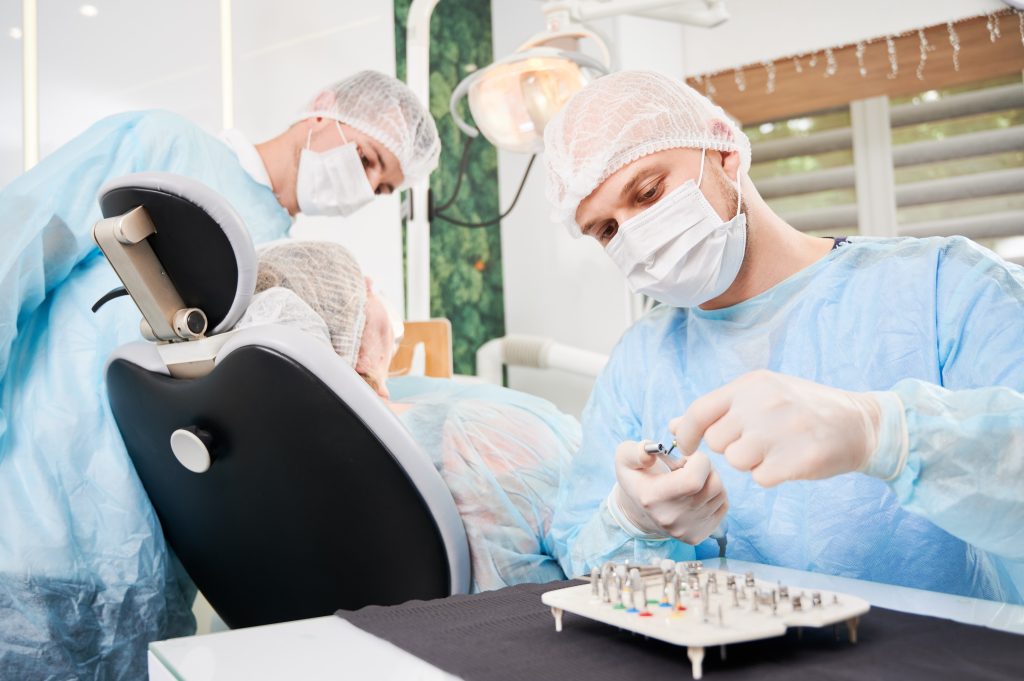
After the treatment plan has been finalized, the implant placement procedure is carried out with precision and planning. All remaining failing teeth are removed, and the jaw is prepared for implant placement. With the aid of digital imaging, implants are placed in areas with strong bone tissue to provide a solid base for the full arch.
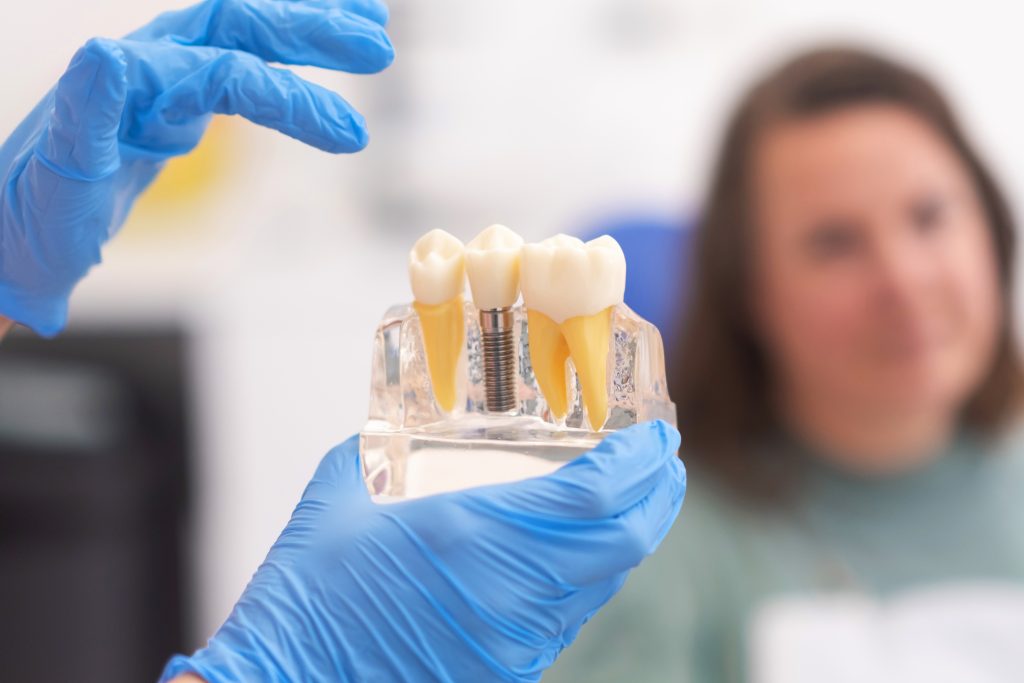
In the All-on-X system, four to six implants are typically placed per arch. The back implants are angled to maximize contact with dense bone while avoiding structures such as the sinus.
You walk out the same day with a functional smile instead of waiting months without teeth.
3. Osseointegration and Final Restorations
After placement, the healing process begins. During this time, a natural process called osseointegration allows the implants to fuse securely with your jawbone. This bonding forms a strong and stable connection between the bone and the implants, and this process typically lasts a few months to complete.
During the healing period, temporary teeth are used, and you are able to continue with your daily activities with acceptable comfort. However, some restrictions on certain foods you eat may be required as dental implants heal and fuse with the jawbone.
Finally, after the osseointegration of the dental implants, an impression and digital scan are taken, and a final prosthetic restoration is designed for you. Your final restoration is strong, stable, and designed to look and feel natural, so you can eat, speak, and smile with confidence.
 Key Differences Between All-on-X and Traditional Implants
Both options give you a full set of teeth, but they differ in how the implants are placed and how many are used. The main difference is that after an All-on-X procedure, fewer implants are strategically placed, which makes the whole procedure easier and minimizes the need for bone grafting (in most patients). Traditional implants, on the other hand, typically involve placing more implants, which can offer greater flexibility depending on your bone condition and how your upper and lower jaws function together.
The best option depends on the condition of your bone, your oral health, and what you want to achieve from the treatment. While both options can produce strong results, All-on-X is often considered the more advanced full-arch solution due to its streamlined surgical approach and modern planning principles. That said, the best treatment ultimately depends on your specific anatomy and goals.
Regardless of the approach selected, long-term success depends on proper care and maintenance.
Like natural teeth, implants require consistent care. Brushing, cleaning your prosthetic, and keeping regular dental visits will help protect your investment for years to come.
Making the Right Dental Decision
Today’s implant surgery is highly precise. Advanced 3D imaging allows us to plan placement carefully and position each implant exactly where it needs to be. Whether you are looking for a dental implant procedure with four or six implants per arch, the aim is always to provide a stable, long-term solution.
Through a natural process called osseointegration, the implants fuse with your jawbone, creating a level of stability that dentures simply cannot match.
One of the most common questions we hear is how long implants will last. With proper care and regular dental visits, implants can last decades.
If you’re living with missing teeth or uncomfortable dentures, dental implants can restore both function and confidence. For many patients, implants are not just a dental upgrade. They’re literally a life-changing solution.
The best next step is a personalized consultation, where we evaluate your bone health, discuss your goals, and design a treatment plan tailored to you.